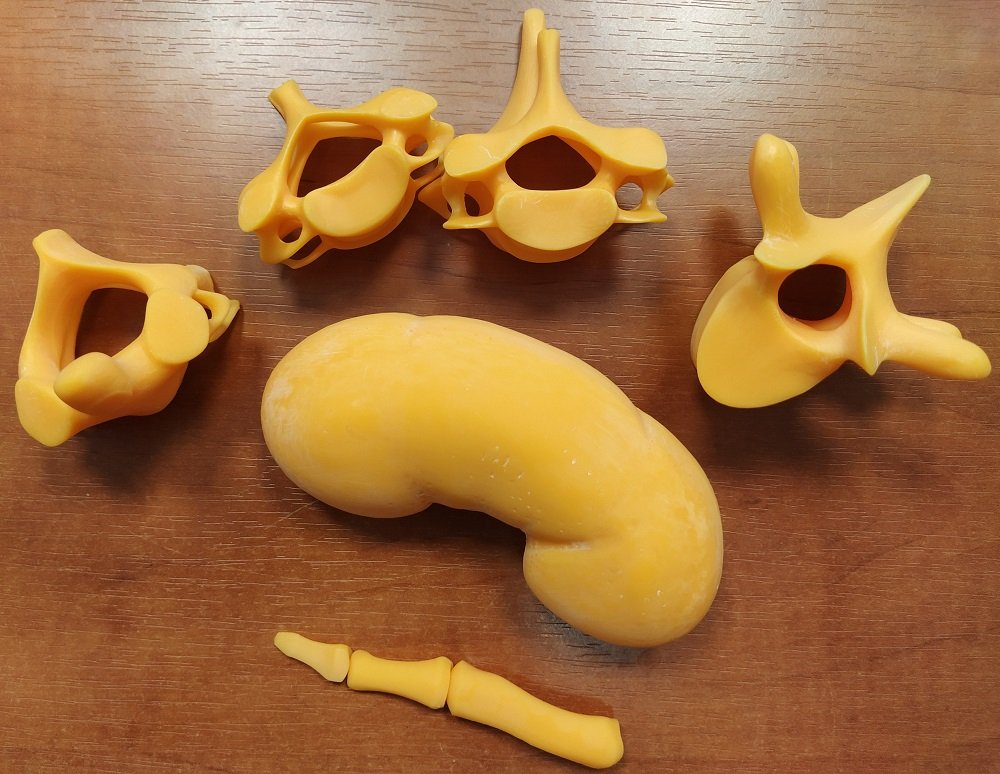
3D printing in teaching biomedical informatics
In September
2019, the new study program on biomedical informatics was opened at the Faculty
of Management Science and Informatics. The graduates of this study program should
be employed primarily in the areas of design and implementation of information
systems for medical facilities and in analysis of medical and biomedical data
using machine learning. Course on basics of theoretical medicine is also
a part of this unique study program. By completing this course, students will
get acquainted with the creation of expressions and phrases used in medical
terminology, acquire basic knowledge about the anatomy of the human body and,
in practical classes, they will get acquainted with the basics of
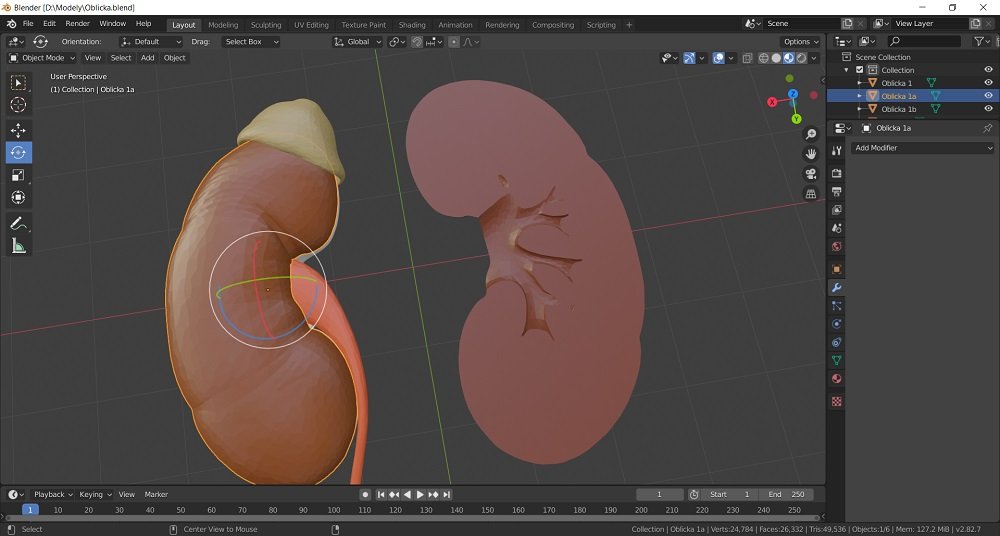
three-dimensional (3D) modeling, its use in medical practice and with creation
of animation in Blender.
A typical use
of three-dimensional modeling for medical purposes is to create models for medical simulators based on virtual or
augmented reality. In addition to such use, a combination of three-dimensional
modeling with 3D printing has become popular and useful in creation
of prostheses and implants, in planning
and preparation of complex surgery, in creation
of teaching equipment or artificial
organs in the form of so-called bioprinting. The possibility of creating teaching
equipment motivated teachers of the course on the basics of theoretical medicine
to apply for a grant from the Tatra banka Foundation in order to purchase a 3D
printer and use it to print models of selected organs of the human body. This
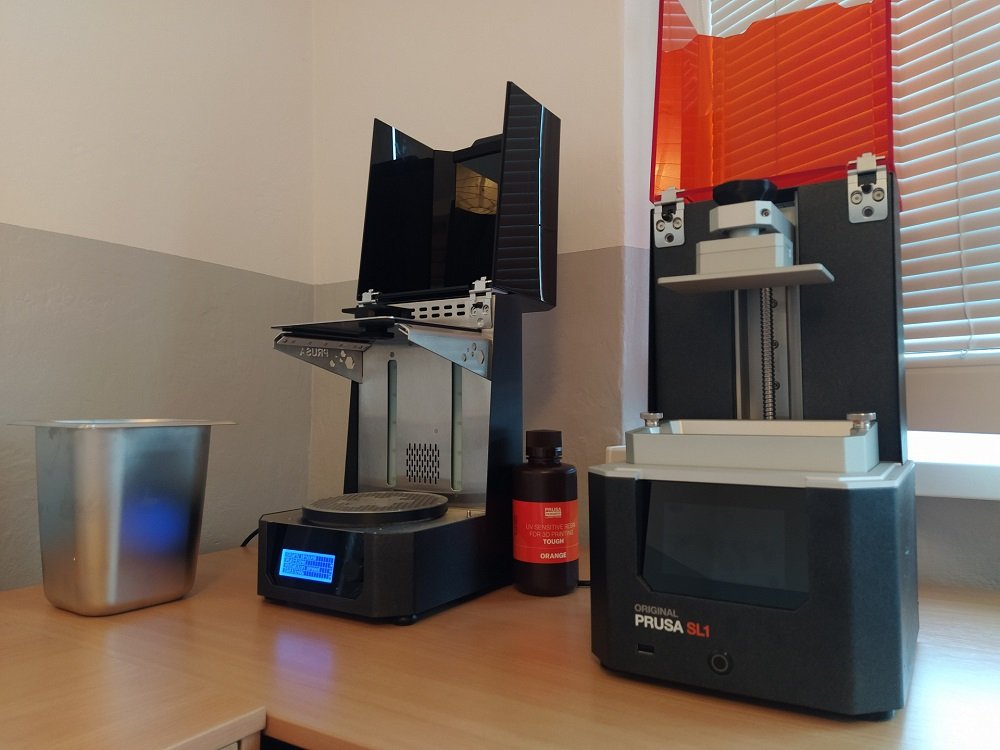
grant was obtained, and thanks to it, a 3D printer with stereolithography
technology was purchased in the year 2020. This printer allows to create very
detailed prints (height of one layer at the level of 0.025 - 0.1 mm and
resolution in the x and y axes at the level of 47 μm).
During the year 2021, the teachers of the course on
the basics of theoretical medicine as well as other employees of the Department
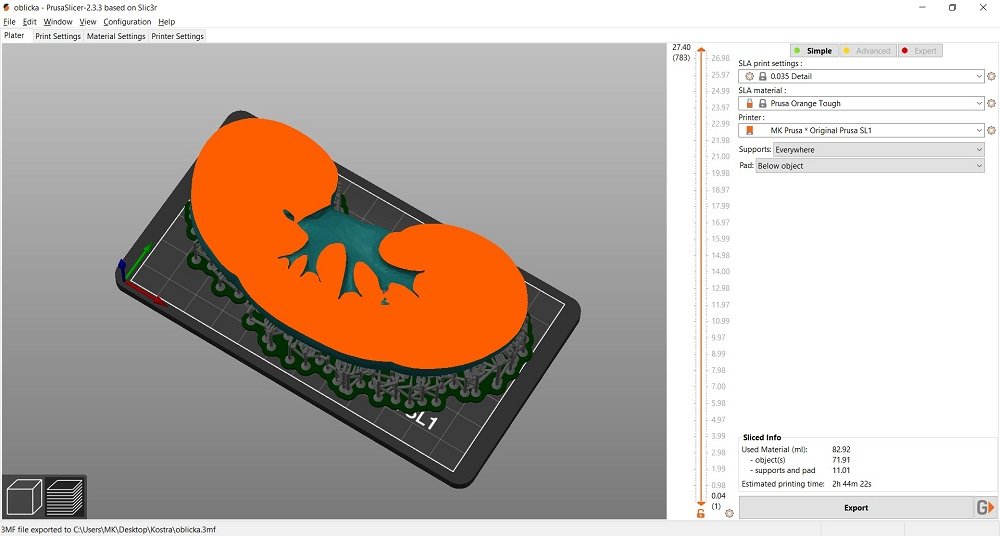
of Informatics have created and modified 3D models of selected organs of the
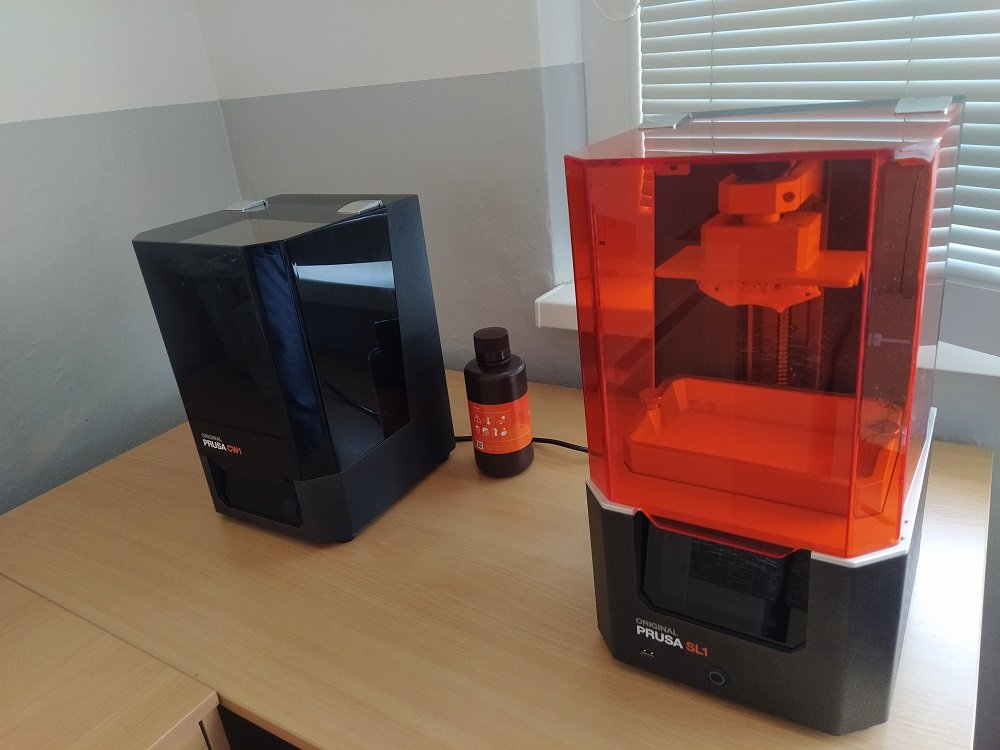
human body for the needs of 3D printing. These have been printed on the
purchased 3D printer and cleaned in a curing and washing machine supplied with
the 3D printer. Although due to the current pandemic situation it is not
possible to teach the course in a face-to-face form, we hope that the printed
models of human body organs will be illustrative teaching equipment that
students can use to learn the basics of human body anatomy.